Chapter OneChapitre Unบทที่หนึ่ง
Born Without a Name in Any RegistryNé sans nom dans aucun registreเกิดมาโดยไม่มีชื่อในทะเบียนใดๆ
Kouthay was born on January 18, 1953, in Paksé, Laos — but his birth was never recorded in Thailand. His name itself carries meaning: his maternal grandfather, Chanthay, chose the name Kouthay, which means "I am Thai" — a declaration of identity that would define Kouthay's entire life. Yet in the eyes of the Thai state, he simply did not exist. He grew up as a Mahisanan — a Thai word for those whose nationality and legal status remain unresolved, caught between borders and bureaucracies.Kouthay est né le 18 janvier 1953 à Paksé, au Laos — mais sa naissance n'a jamais été enregistrée en Thaïlande. Son prénom porte un sens profond : son grand-père maternel, Chanthay, lui a donné le nom de Kouthay, qui signifie « Je suis Thaï » — une déclaration d'identité qui allait définir toute sa vie. Pourtant, aux yeux de l'État thaïlandais, il n'existait tout simplement pas. Il a grandi comme un Mahisanan — un mot thaï désignant ceux dont la nationalité et le statut juridique restent non résolus, pris entre les frontières et les bureaucraties.กูไทยเกิดเมื่อวันที่ 18 มกราคม พ.ศ. 2496 ที่เมืองปากเซ ประเทศลาว — แต่การเกิดของเขาไม่เคยถูกบันทึกในประเทศไทย ชื่อของเขามีความหมายลึกซึ้ง: คุณตาของเขา จันทร์ไท ตั้งชื่อว่า กูไทย ซึ่งมีความหมายว่า "ฉันเป็นคนไทย" — เป็นการประกาศตัวตนที่กำหนดชีวิตของกูไทยตลอดมา แต่ในสายตาของรัฐไทย เขาไม่มีตัวตน เขาเติบโตขึ้นในนาม มหิสนันท์ — คำที่สะท้อนถึงผู้ที่สัญชาติและสถานะทางกฎหมายยังไม่ได้รับการแก้ไข ติดอยู่ระหว่างพรมแดนและระบบราชการ
His family was divided by the Mekong River, the great waterway that forms the natural boundary between Laos and Thailand. His father was a man known by the nickname One — a Thai name meaning "soft" — and the family had lived for generations across the river, moving freely between Laos and Thailand long before modern nation-states drew their lines on maps and demanded papers to prove belonging. Laos was at war during Kouthay's childhood, and in the chaos of conflict, many documents were inevitably lost.Sa famille était divisée par le Mékong, le grand fleuve qui forme la frontière naturelle entre le Laos et la Thaïlande. Son père était connu sous le surnom de One — un prénom thaï signifiant « doux » — et la famille avait vécu pendant des générations des deux côtés du fleuve, circulant librement entre le Laos et la Thaïlande bien avant que les États modernes ne tracent leurs frontières sur les cartes et n'exigent des papiers pour prouver son appartenance. Le Laos était en guerre pendant l'enfance de Kouthay, et dans le chaos du conflit, de nombreux documents ont inévitablement été perdus.ครอบครัวของเขาถูกคั่นด้วยแม่น้ำโขง สายน้ำยิ่งใหญ่ที่เป็นพรมแดนธรรมชาติระหว่างลาวและไทย บิดาของเขาเป็นชายที่รู้จักในชื่อเล่นว่า วัน — ชื่อไทยที่แปลว่า "อ่อน" — ครอบครัวของเขาอาศัยอยู่ทั้งสองฝั่งแม่น้ำมาหลายชั่วอายุคน ข้ามไปมาอย่างอิสระระหว่างลาวและไทยมาก่อนที่รัฐชาติสมัยใหม่จะขีดเส้นแบ่งบนแผนที่และบังคับให้มีเอกสารเพื่อพิสูจน์ตัวตน ลาวอยู่ในภาวะสงครามช่วงวัยเด็กของกูไทย และท่ามกลางความโกลาหลของสงคราม เอกสารจำนวนมากจึงสูญหายไปอย่างหลีกเลี่ยงไม่ได้
The ReunionLes retrouvaillesการพบกันอีกครั้ง
In 1970, at the age of 17, Kouthay crossed the Mekong River from Laos to Thailand, seeking his family. He arrived in Nong Khai, a border town on the Thai side of the river, carrying no documents — only a family name and a desperate hope that his relatives would recognize him.En 1970, à l'âge de 17 ans, Kouthay a traversé le Mékong du Laos vers la Thaïlande pour retrouver sa famille. Il est arrivé à Nong Khai, une ville frontalière côté thaïlandais, sans aucun document — seulement un nom de famille et l'espoir désespéré que ses proches le reconnaissent.ในปี พ.ศ. 2513 เมื่ออายุ 17 ปี กูไทยข้ามแม่น้ำโขงจากลาวสู่ประเทศไทยเพื่อตามหาครอบครัว เขามาถึงหนองคาย เมืองชายแดนฝั่งไทย โดยไม่มีเอกสารใดๆ — มีเพียงนามสกุลและความหวังอันแรงกล้าว่าญาติพี่น้องจะจำเขาได้
His search was successful. In Nong Khai, Kouthay found his family: his father One Mahisanan, his sister Dok Mai, and two brothers. They recognized him immediately — not through any official document, but through the bonds of blood and memory. They confirmed his identity, his heritage, and his place within the family. They confirmed that he was Thai.Sa recherche fut couronnée de succès. À Nong Khai, Kouthay a retrouvé sa famille : son père One Mahisanan, sa sœur Dok Mai et deux frères. Ils l'ont reconnu immédiatement — non par un document officiel, mais par les liens du sang et de la mémoire. Ils ont confirmé son identité, son héritage et sa place au sein de la famille. Ils ont confirmé qu'il était Thaïlandais.การตามหาของเขาประสบความสำเร็จ ที่หนองคาย กูไทยได้พบครอบครัว: บิดาวัน มหิสนันท์ น้องสาวดอกไม้ และพี่น้องชายสองคน พวกเขาจำเขาได้ทันที — ไม่ใช่ผ่านเอกสารทางการใดๆ แต่ผ่านสายเลือดและความทรงจำ พวกเขายืนยันตัวตน มรดก และฐานะของเขาในครอบครัว พวกเขายืนยันว่าเขาเป็นคนไทย
Documents: Proof Across BordersDocuments : preuves à travers les frontièresเอกสาร: หลักฐานข้ามพรมแดน
"I have always known who I am. The problem is that the government does not know I exist."« J'ai toujours su qui je suis. Le problème, c'est que le gouvernement ne sait pas que j'existe. »"ผมรู้มาตลอดว่าผมคือใคร ปัญหาคือรัฐบาลไม่รู้ว่าผมมีตัวตนอยู่"
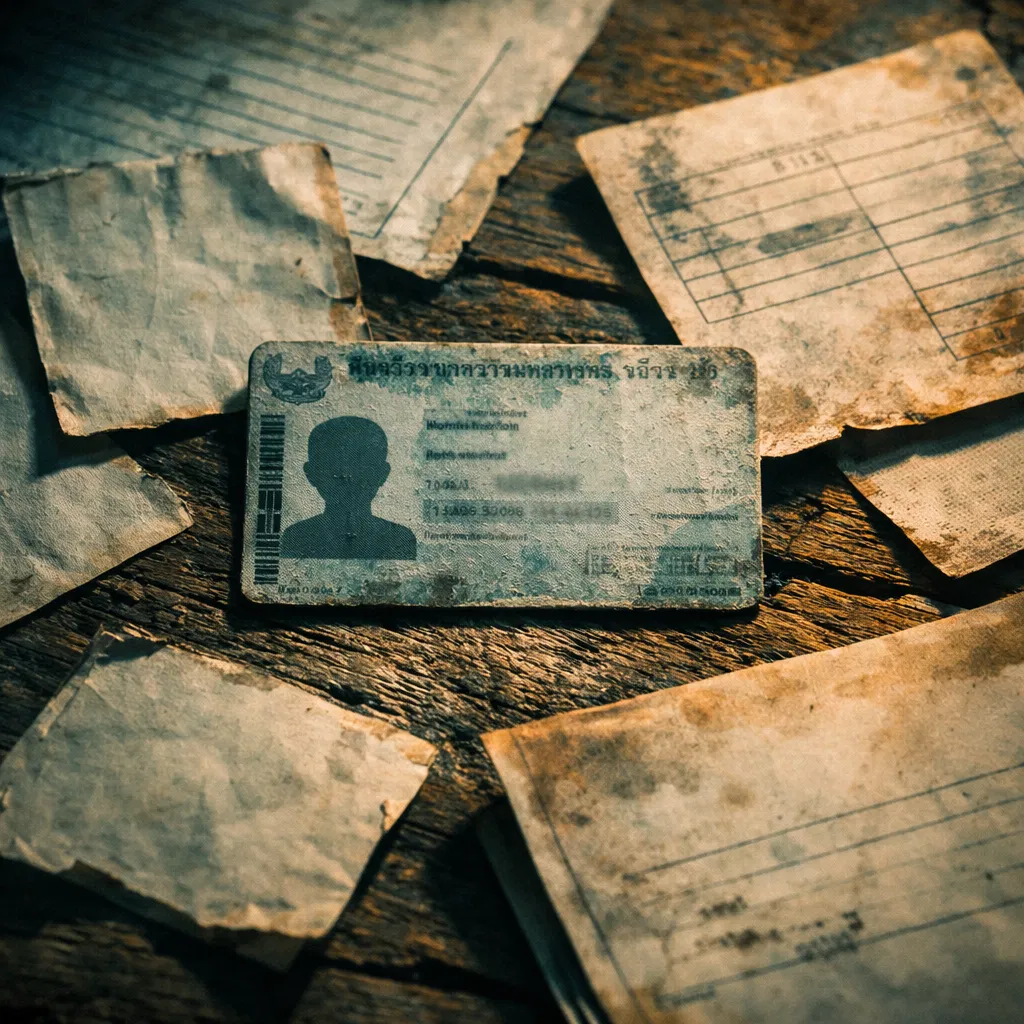
Yet despite his family's recognition, despite his Thai heritage, his work in Thai schools, and the documents he had gathered — Kouthay remained invisible to the Thai state. He had no Thai birth certificate, no Thai ID card, no official Thai proof of his existence or his nationality. For decades, he lived in the shadows — a man known to his family and community, a teacher recognized by his students and colleagues, but unknown to the government.Pourtant, malgré la reconnaissance de sa famille, malgré son héritage thaïlandais, son travail dans les écoles thaïlandaises et les documents rassemblés, Kouthay est resté invisible aux yeux de l'État thaïlandais. Il n'avait ni acte de naissance thaïlandais, ni carte d'identité, aucune preuve officielle de son existence ou de sa nationalité. Pendant des décennies, il a vécu dans l'ombre — un homme connu de sa famille et de sa communauté, un enseignant reconnu par ses élèves et collègues, mais inconnu du gouvernement.แม้ครอบครัวจะให้การยอมรับ แม้จะมีมรดกความเป็นไทย การทำงานในโรงเรียนไทย และเอกสารที่รวบรวมไว้ — กูไทยก็ยังคงไร้ตัวตนในสายตาของรัฐไทย เขาไม่มีสูติบัตรไทย ไม่มีบัตรประจำตัวประชาชน ไม่มีหลักฐานทางการใดๆ ของการมีตัวตนหรือสัญชาติไทย หลายทศวรรษที่เขาใช้ชีวิตในเงามืด — ชายที่ครอบครัวและชุมชนรู้จัก ครูที่นักเรียนและเพื่อนร่วมงานยอมรับ แต่ไม่เป็นที่รู้จักในสายตารัฐบาล
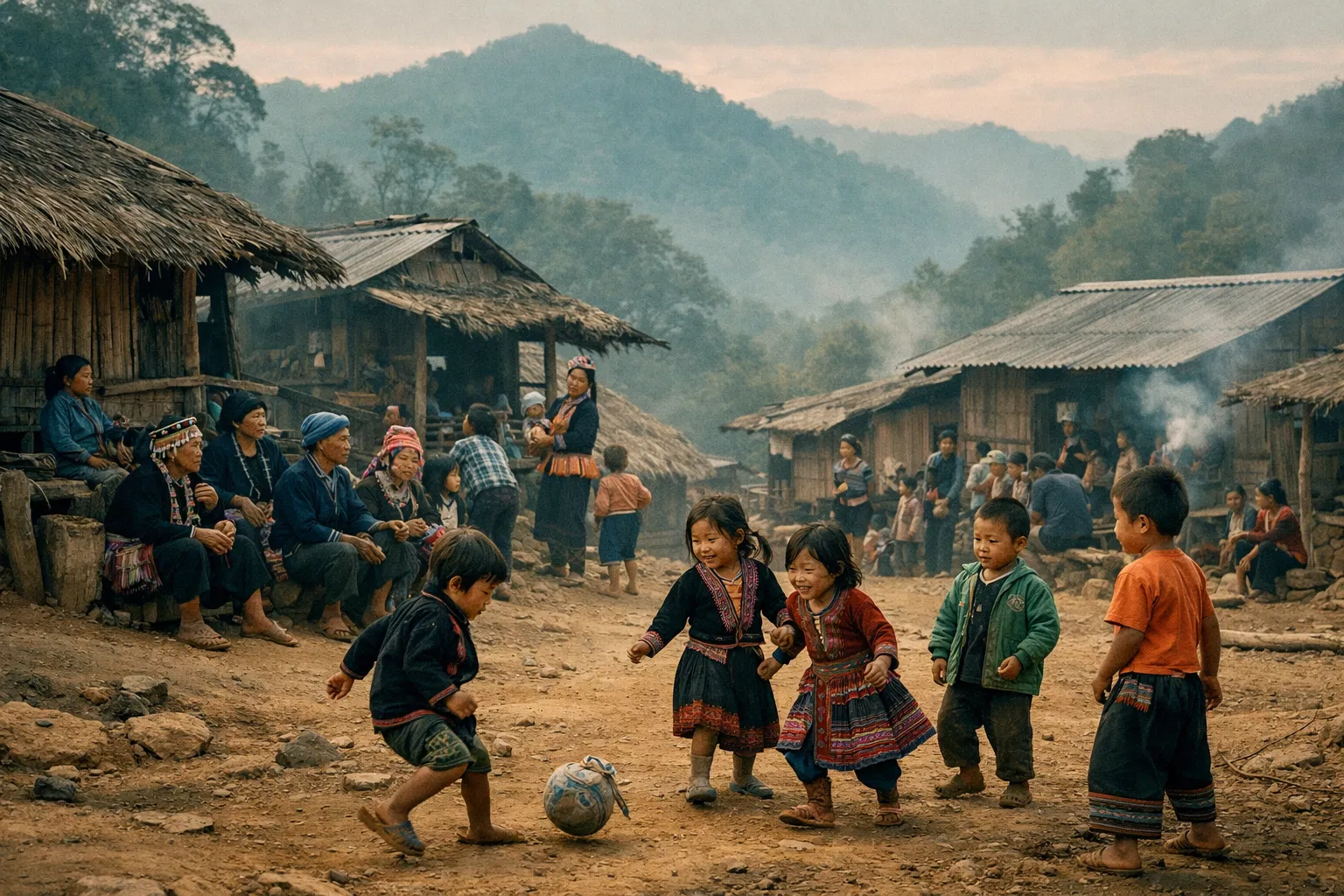
His story is not unique. It is the story of hundreds of thousands of people across Thailand — hill tribe members born in highland villages, children of cross-border families, ethnic minorities who never received birth registration. They are Thailand's invisible population.Son histoire n'est pas unique. C'est l'histoire de centaines de milliers de personnes à travers la Thaïlande — membres de tribus des collines nés dans des villages reculés, enfants de familles transfrontalières, minorités ethniques qui n'ont jamais été enregistrées à la naissance. Ils constituent la population invisible de la Thaïlande.เรื่องราวของเขาไม่ใช่กรณีพิเศษเพียงกรณีเดียว แต่เป็นเรื่องราวของผู้คนหลายแสนคนทั่วประเทศไทย — ชาวเขาที่เกิดในหมู่บ้านบนที่สูง เด็กจากครอบครัวข้ามพรมแดน ชนกลุ่มน้อยทางชาติพันธุ์ที่ไม่เคยได้รับการจดทะเบียนเกิด คนเหล่านี้คือประชากรไร้ตัวตนของประเทศไทย

Kouthay Mahisanan with his wife Viengsavanh and their child. A precious family photograph — "Happy New Year" — testimony of a life built despite legal invisibility.Kouthay Mahisanan avec sa femme Viengsavanh et leur enfant. Une photo de famille précieuse — "Bonne et Heureuse Année" — témoignage d'une vie construite malgré l'invisibilité juridique.กูไทย มหิสนันท์ กับภรรยาเวียงสะหวันและลูกของพวกเขา ภาพถ่ายครอบครัวอันล้ำค่า — "สวัสดีปีใหม่" — เป็นประจักษ์พยานของชีวิตที่สร้างขึ้นแม้จะไร้ตัวตนทางกฎหมาย
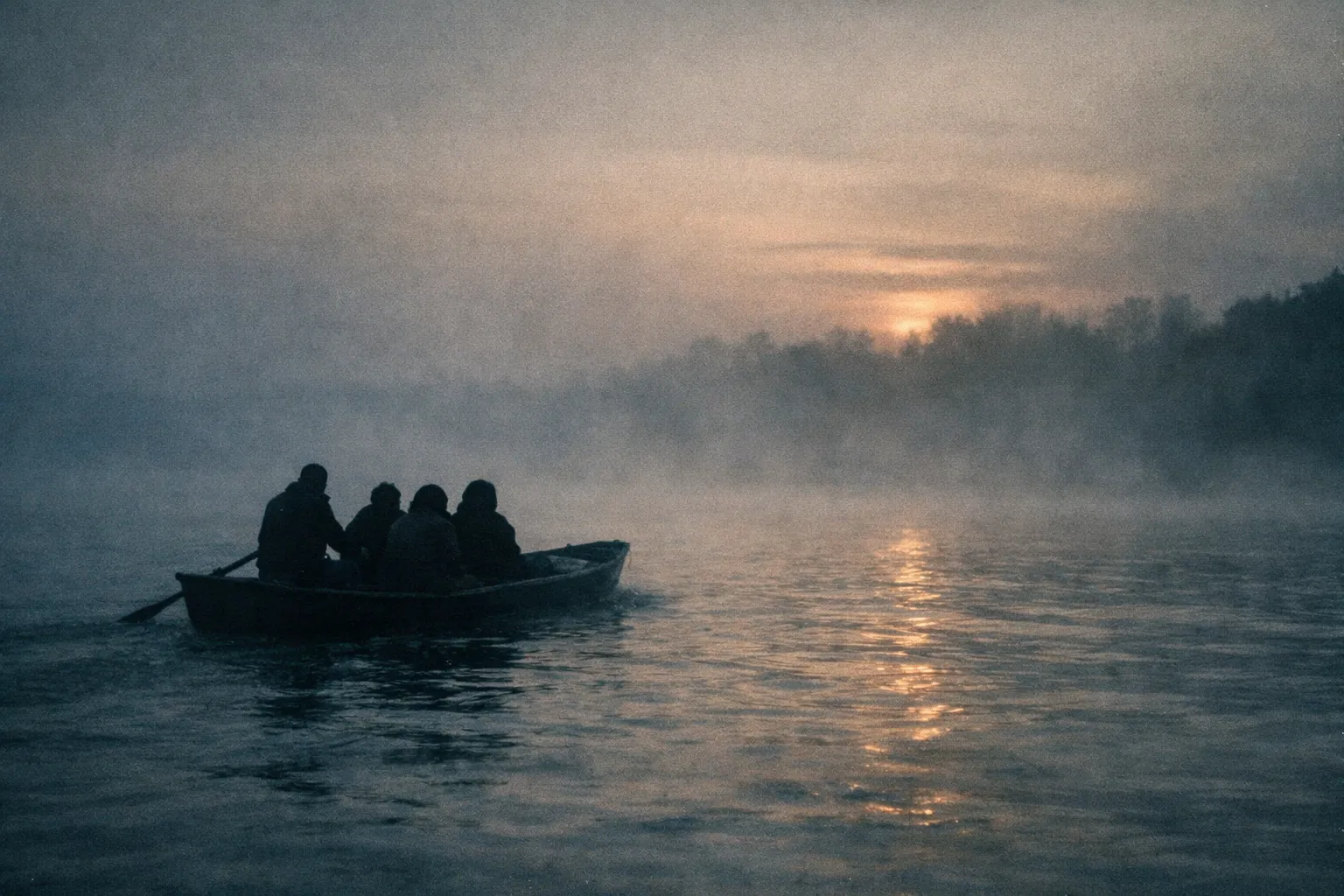
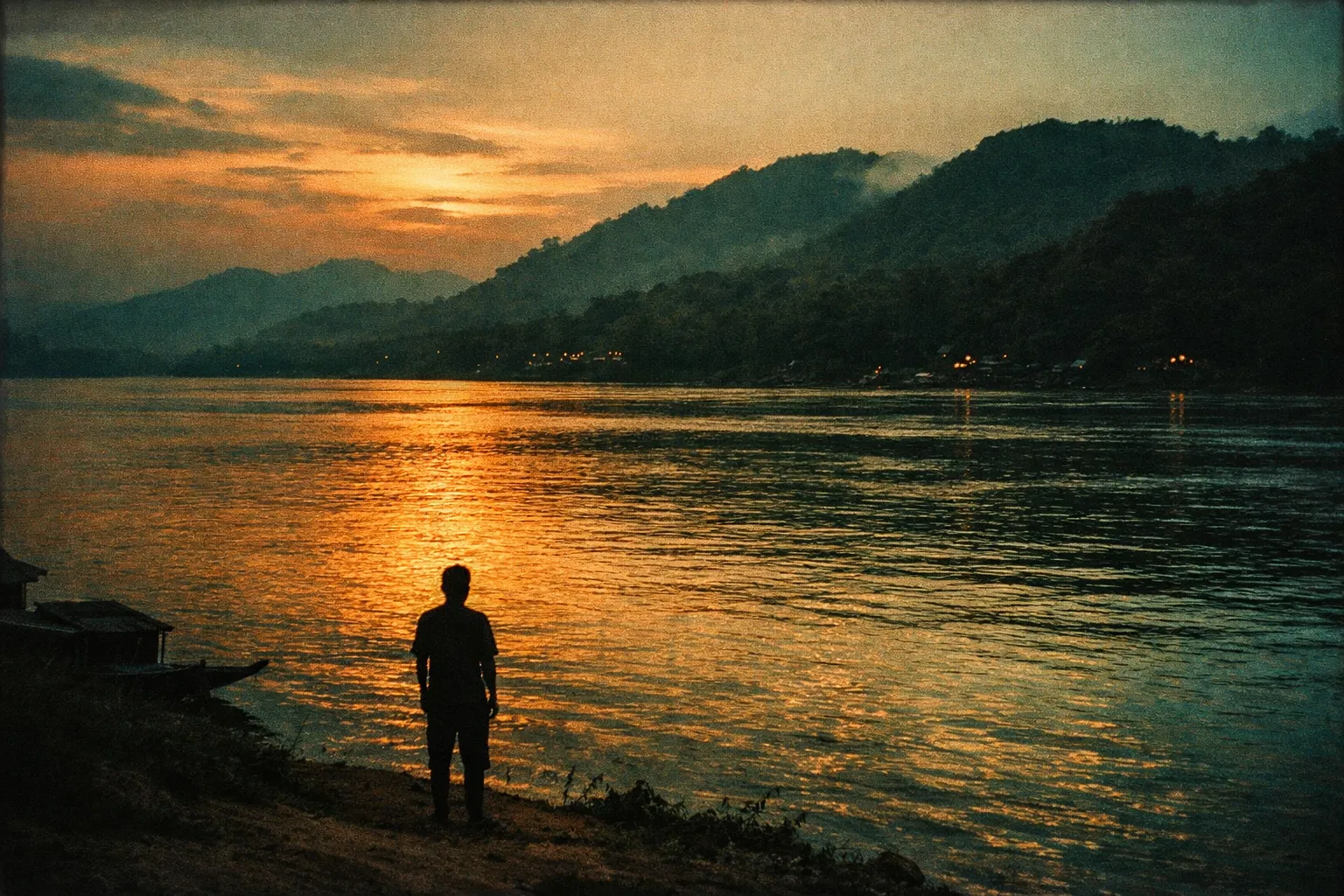
The CrossingLa traverséeการข้ามแม่น้ำ — In 1970, a 17-year-old boy crossed the Mekong from Laos to Nong Khai, Thailand, seeking his family. What he found was recognition — but not from the government.En 1970, un garçon de 17 ans a traversé le Mékong du Laos vers Nong Khai, à la recherche de sa famille. Ce qu'il a trouvé était la reconnaissance — mais pas celle du gouvernement.ในปี พ.ศ. 2513 เด็กชายวัย 17 ปีข้ามแม่น้ำโขงจากลาวสู่หนองคาย ประเทศไทย เพื่อตามหาครอบครัว สิ่งที่เขาพบคือการยอมรับ — แต่ไม่ใช่จากรัฐบาล